
About The Foundry
About Us
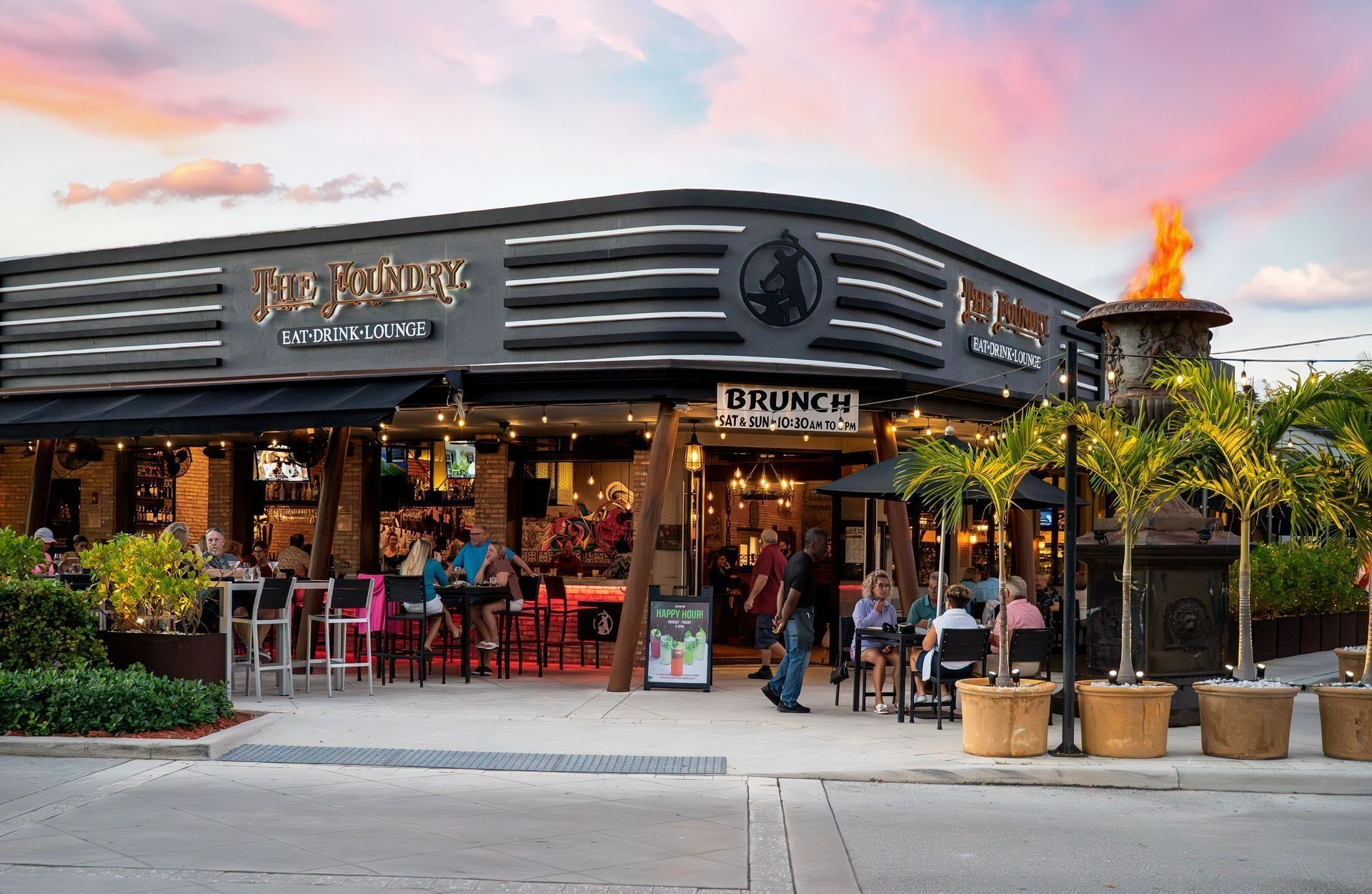
The Foundry was established in 2015. We have enjoyed serving our local community ever since. The concept originated with the idea of bringing “a big city” feel to Pompano Beach, while maintaining a “locals” feel. We wanted to root ourselves in what Americans pride themselves on, diversity and the history of our country. Many of the design elements around the restaurant tell that story; whether it be the graffiti by local Miami artist @subdivine or the old firehouse iron door from Philadelphia that dates back to 1870, we carefully hand-selected antiques, repurposed material, and local artists to aesthetically create an environment that feels timeless.
The menu was built on the same foundation. We have a diverse menu that features different cuisines from around the world. Whether it is date night, a family celebration, a work function, or simply a night out with friends, we offer something for everyone. Some of our most popular items include The Sushi Stack, The Foundry Burger, Eggplant “Meatballs” and our Coffee & Doughnuts. Our beverage program is simply a compliment and reflection of our food menu and design elements. The cocktail list has classics such as The Foundry Old-Fashioned, a cocktail dating back to the late 1800’s, and newer creations such as our Strawberry-Basil Blaze Margarita & Blossom and Brass Mule. In addition, we have an extensive draft beer selection that features many local brewers and a wine list showcasing some of the best wineries out of California.
We have a team of people that we like to call “The Foundry Family.” They are the backbone to what we do. The glue. We are so grateful for what our team does, and it doesn’t go unnoticed that we are nothing without them and the patrons who support our establishment. Whether this will be your first time dining with us or we are a weekly go to stop, we look forward to seeing you on your next visit!
Foundry Fun Facts
Original Flooring from Singer Sewing Machine Factory
01
Front Bar Skirting crafted from the original flooring of the Singer Sewing Machine Factory, established in 1873 in Elizabeth, New Jersey. At its peak, the factory employed over 6,000 workers, making it the largest manufacturer globally during that era. The flooring bears authentic wear and tear marks from its industrial days, preserving a piece of manufacturing history. This unique piece was acquired through auction at Urban Remains, a renowned source for architectural artifacts.
Cast Iron Radiator
02
Under the first garage door window near the front entry doors, you'll find a cast iron radiator from Philadelphia, PA, dating back to circa 1863. Radiators served as the primary heating systems from the 1800s to the 1960s
Vintage Phone
03
The Antique Montgomery Ward & Co. wall oak phone represents a piece of early 20th-century telecommunications history. Montgomery Ward, a well-known American department store, also sold various consumer goods under its own brand. The oak wall phone was likely manufactured during the early 1900s, a time when such phones became common in homes and businesses across the United States.
Antique Umbrella Stand
04
The antique umbrella stand, positioned next to the front door entrance, adds both historical charm and practicality to the space. Originating from Europe and dating back several hundred years, it reflects craftsmanship and design typical of its era. Such stands were essential in European homes, providing a designated place to store umbrellas and walking sticks, keeping them readily accessible while preventing water from dripping indoors.
I-beam
05
The I-beam situated near the front door waiting area evokes the sensation of sitting on the iconic beam depicted in the 1932 "Lunch Atop a Skyscraper" photograph, reminiscent of New York City's skyline history. Adjacent to it is an antique fire extinguisher from Buffalo, NY, manufactured around 1920 by the Buffalo Fire Appliance Corporation. This extinguisher, crafted from copper and brass, serves as a tangible relic from the early 20th century, reflecting both the craftsmanship of the era and its practical use in fire safety.
Vintage Air Hose Reel
06
The Orange Hose reel displayed above the waiting area near the hostess stand is a historical artifact dating back to the 1890s in Chicago. Originally employed in factories of that era, its primary function was to blow off dust and particles, reflecting the industrial practices of the time.
The Hostess Stand
07
The hostess stand is constructed using a wooden mold dating back to around 1878. Initially, this mold was instrumental in shaping early crane buckets, serving as a template to ensure the accuracy and quality of the subsequent permanent steel versions.
Shag Lighting
08
The orange hanging light fixtures, known as "shag lighting," were popular during the 1950s. These fixtures typically featured vibrant colors and often had a textured glass or plastic design that emitted a soft, ambient light. They were commonly used in interior décor, adding a retro and playful vibe to spaces like diners and lounges. The two top booths by the side building windows adorned with these fixtures would have created a cozy and nostalgic atmosphere, reflecting the mid-century aesthetic of the era.
Bridge Out Steel Plaque
09
Above the back door leading to the patio, there is a plaque titled "Bridge Out," originating from the Chicago River in the 1800s. This plaque likely commemorates a historical event or structure related to the Chicago River, reflecting its early infrastructure or development during that era.
Steel Machine Gears
10
During the Industrial Revolution, metal gears played a crucial role in driving machinery across various industries. These gears were essential components in the mechanization of manufacturing processes, allowing for the efficient transfer of power and enabling the automation of tasks that were previously done manually. The mass production of gears using techniques such as hobbing and form cutting revolutionized industries like textiles, transportation, and manufacturing, contributing significantly to the advancement of technology and economic growth during that period.
Metal Wine Locker
11
The Metal Wine Locker near the kitchen originally served as a welder's cabinet, designed to store a variety of welding tools. Over time, it transitioned into a functional storage unit that now holds wine bottles, showcasing its versatile history from industrial use to domestic utility.
Philly Fire Door
12
The fire door slider, a substantial piece made of steel and wood, positioned near the bathroom entrance, was produced by Westinghouse in Philadelphia circa 1900. This door likely served as a robust fire safety measure typical of industrial and commercial settings of that era.
Chicago - Metal Bridge Plaque
13
The significant metal plaque above the bathroom entrance, weighing over 150 pounds of solid steel, originally functioned as a bridge marker. It proudly displays the emblem of M. Lassig Bridge and Iron Works, renowned builders from Chicago in 1889.
Wooden Workbench
14
Adjacent to the bathroom entrance stands a carpenter's wooden workbench from around 1900. This sturdy piece of furniture includes a table equipped with a variety of clamping and holding devices, showcasing its functional design typical of early 20th-century craftsmanship.
Vintage Steel Ship Chain
15
Hanging from the ceiling is a sizable metal ship chain, dating back to approximately 1877 and hailing from Norfolk, Virginia. Weighing over 500 Lbs and over 10 feet in length. This historical artifact serves as a testament to the maritime and industrial heritage of the region during that era
Antique Pully Light Fixture
16
The lighting fixture suspended above the 8-top table adjacent to the graffiti wall was once a hay trolley employed for lifting haystacks. This antique pulley system has been creatively transformed into a distinctive lighting fixture, showcasing its historical origins from the early 1900s.
Graffiti Art
17
The large vibrant graffiti wall, titled "A Broken Heart Can Grow Wings to Fly Again," was created by Miami-based artist Jacqueline Renaud. The concept for this piece, as well as the overall theme of the Foundry restaurant, was envisioned and designed by Franco Grieco, one of its owners.
Lunch Atop a Skyscraper
18
The iconic photograph "Lunch Atop a Skyscraper," taken on September 20, 1932, features 11 ironworkers sitting on a steel beam suspended 850 feet above the ground during the construction of the Rockefeller Center. Charles C. Ebbets is the original photographer.
Chicago Brick Wall
19
The bricks used throughout the Foundry were all sourced from Chicago, Illinois, around 1871, following the Great Chicago Fire. Each brick is stamped by the original manufacturer the Chicago Brick Company. The clay used to make each brick was sourced from the Chicago River.
Original Singer Sewing Machine
20
On top of the metal shelving by the front bar sits a black Singer sewing machine, complementing the Singer flooring around the bar. The initial Singer sewing machines were celebrated for their practicality and efficiency, featuring an eye-pointed needle and lock stitch that were revolutionary for their time.
Vintage Luggage
21
Beside the Singer Sewing machine rests a piece of luggage from 1920, used by immigrants who arrived in America seeking better opportunities during the Industrial Revolution, many of them having worked in factories.
Wells Fargo & Co Trunk
22
Above the front bar, within the central metal liquor storage, is a Wells Fargo & Co. Express Iron Bound Cargo trunk. This wood and metal safe box, dating from 1860-1870, was used to transport valuables and keepsakes overland by stagecoaches. Weighing around 125LBS.
Metal Toolbox
23
Above the front bar, within the metal liquor storage area, sits a large red metal toolbox dating back to around 1900. Used to house popular tools of that era.
Abercrombie & Fitch
24
If you examine the ceiling, you'll notice 2-inch-thick wooden planks originating from a barn in Wexford, PA, dating back to the late 1800s. This particular series of large barn wood was utilized also by Abercrombie & Fitch, the distinguished designer.